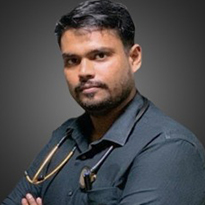
M.D. (Chest Medicine), ISCCM, FCCS, Consultant Physician, Critical Care (ICU), Specialist & Interventional Pulmonologist
Dr Prem Maurya is a leading chest physician in Bhandup and Mulund. He expertises in ailments such as TB, Covid and post Covid care, ILD, Allergy disorder, Sleep disorder & Infectious diseases. He is well experienced in advance bronchoscopies and is critical care expert.
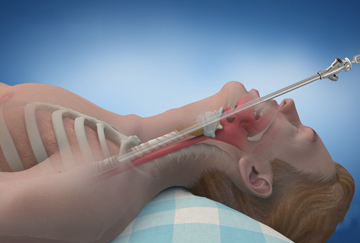
Bronchoscopy is a procedure that lets doctors look at your lungs and air passages. It's usually performed by a doctor who specializes in lung disorders (a pulmonologist). During bronchoscopy, a thin tube (bronchoscope) is passed through your nose or mouth, down your throat and into your lungs.
Bronchoscopy is most commonly performed using a flexible bronchoscope. However, in certain situations, such as if there's a lot of bleeding in your lungs or a large object is stuck in your airway, a rigid bronchoscope may be needed.
Common reasons for needing bronchoscopy are a persistent cough, infection or something unusual seen on a chest X-ray or other test.
Bronchoscopy can also be used to obtain samples of mucus or tissue, to remove foreign bodies or other blockages from the airways or lungs, or to provide treatment for lung problems.
Complications from bronchoscopy are uncommon and usually minor, although they are rarely severe. Complications may be more likely if airways are inflamed or damaged by disease. Complications may be related to the procedure itself or to the sedative or topical numbing medicine.
Preparation for bronchoscopy usually involves food and medication restrictions, as well as discussion about additional precautions.
You may be asked to stop taking blood-thinning medications such as aspirin, clopidogrel (Plavix) and warfarin (Coumadin, Jantoven) several days before bronchoscopy. You'll also be asked not to eat or drink for four to eight hours before the procedure.
On the day of the procedure, you'll be asked to put on a gown and take out any dentures, partial dentures or removable bridges. You may also be asked to remove hearing aids, contact lenses or glasses.
If you'll be going home after the procedure, you'll need a friend or family member to take you home. You won't be able to drive because of the lingering effects of the medications used during the procedure. It's also a good idea to have someone stay with you for the rest of the day.
Your doctor may recommend bronchoscopy if you have:
No, bronchoscopy is generally not painful. We use local anaesthesia and mild sedation to keep you comfortable. Most patients describe it as a feeling of pressure rather than pain.
The procedure itself typically takes 20-40 minutes. Including preparation and recovery, plan for 2-4 hours at the hospital.
The cost depends on the type of bronchoscopy and anaesthesia required. Call +91 9819954198 for a transparent cost estimate based on your case.
Wait 2 hours after the procedure before eating or drinking, until the numbing medicine wears off and your gag reflex returns.
Visual findings are discussed immediately. Biopsy or culture results typically take 3-7 days depending on the tests ordered.
If your doctor has advised bronchoscopy or you have a persistent chest symptom, get an expert opinion from Dr. Prem Maurya.

M.D. (Chest Medicine), ISCCM, FCCS, Consultant Physician, Critical Care (ICU), Specialist & Interventional Pulmonologist
Dr Prem Maurya is a leading chest physician in Bhandup and Mulund. He expertises in ailments such as TB, Covid and post Covid care, ILD, Allergy disorder, sleep disorder & infectious diseases. He is well experienced in advance bronchoscopies and is critical care expert.